While Britain’s railways keep the nation moving every day, there are always areas for improvements to be made and boost customers’ experiences travelling.
Colleagues across the industry are constantly working hard to identify where improvements can be made, collaborating to produce efficient results that benefit everyone.
Whether that’s around punctuality, timetabling, managing disruption or customer information, partners across the railway are busy changing things for the better.
Lorem ipsum dolor sit amet, consectetur adipiscing elit. Suspendisse vitae magna est. Vestibulum at metus magna.
Aenean mauris velit, sodales ac nisi vitae, lacinia vestibulum turpis. Curabitur non lacus tempor enim ultrices egestas in et metus. Etiam risus purus, viverra non lacinia non, bibendum sit amet ante. Phasellus sodales risus id ante viverra iaculis. Sed tristique a purus ac suscipit.
Lorem ipsum dolor sit amet, consectetur adipiscing elit.
On this page you can:
Point one - Lorem ipsum dolor sit amet, consectetur adipiscing elit.
Point two - Lorem ipsum dolor sit amet, consectetur adipiscing elit.
Point three - Lorem ipsum dolor sit amet, consectetur adipiscing elit.
Point four - Lorem ipsum dolor sit amet, consectetur adipiscing elit.
Lorem ipsum dolor sit amet, consectetur adipiscing elit.
Curabitur vel nulla sit amet diam vehicula pretium. Praesent sit amet congue sem, et tincidunt orci. Vestibulum vitae velit non erat accumsan porttitor ut eu purus. Nullam varius cursus neque, nec pellentesque sapien vehicula ac. Donec sollicitudin, mauris id vehicula tempus, purus diam pulvinar erat, auctor scelerisque orci purus nec velit. Duis rhoncus dolor interdum dignissim accumsan. Nullam blandit diam eu elit mollis ullamcorper. Quisque non metus tempus, aliquet ante non, rhoncus velit. Integer ipsum enim, accumsan a urna et, dictum fringilla neque. Proin id ante metus. Vestibulum ante ipsum primis in faucibus orci luctus et ultrices posuere cubilia curae; Sed fringilla interdum velit, eu pharetra felis fringilla vitae. Lorem ipsum dolor sit amet, consectetur adipiscing elit. Vivamus auctor sapien non metus pretium iaculis.
Phasellus vel pharetra dolor, vitae convallis mi. Nunc vel libero finibus, elementum quam et, fringilla massa. Morbi at venenatis eros. Nullam eleifend velit vitae mi volutpat tincidunt. Donec tempus, augue ac lacinia imperdiet, lorem diam pulvinar nibh, a mattis nibh odio vel magna. Sed ac dapibus nulla. Duis bibendum erat sit amet nulla viverra, tincidunt ornare nibh egestas. Aenean pharetra sagittis bibendum. Maecenas tempus risus faucibus justo lacinia pellentesque. Lorem ipsum dolor sit amet, consectetur adipiscing elit. Duis id nisi a nulla accumsan rutrum. Aenean non sapien non urna feugiat fermentum et quis nisi. In est libero, pharetra ac iaculis quis, volutpat ac diam. Aenean ut consectetur odio, at semper sem. Proin sit amet dolor id magna dictum aliquet. Cras malesuada ac leo eget pretium.
Duis auctor nibh ultrices arcu aliquam commodo. Donec auctor accumsan lorem, in tristique mauris cursus eu. Phasellus lobortis, metus vitae dignissim varius, mi urna maximus ipsum, vel tincidunt lacus tellus a ex. Aliquam vitae risus eu quam fermentum interdum a vitae diam. Aenean rhoncus erat varius tortor efficitur tempor. Donec convallis nulla nec enim vehicula, a consequat enim euismod. Duis cursus sem et erat venenatis dapibus. Aenean sem nisi, bibendum id lacinia eu, tincidunt sit amet lorem.
Donec tempus, augue ac lacinia imperdiet, lorem diam pulvinar nibh, a mattis nibh odio vel magna.
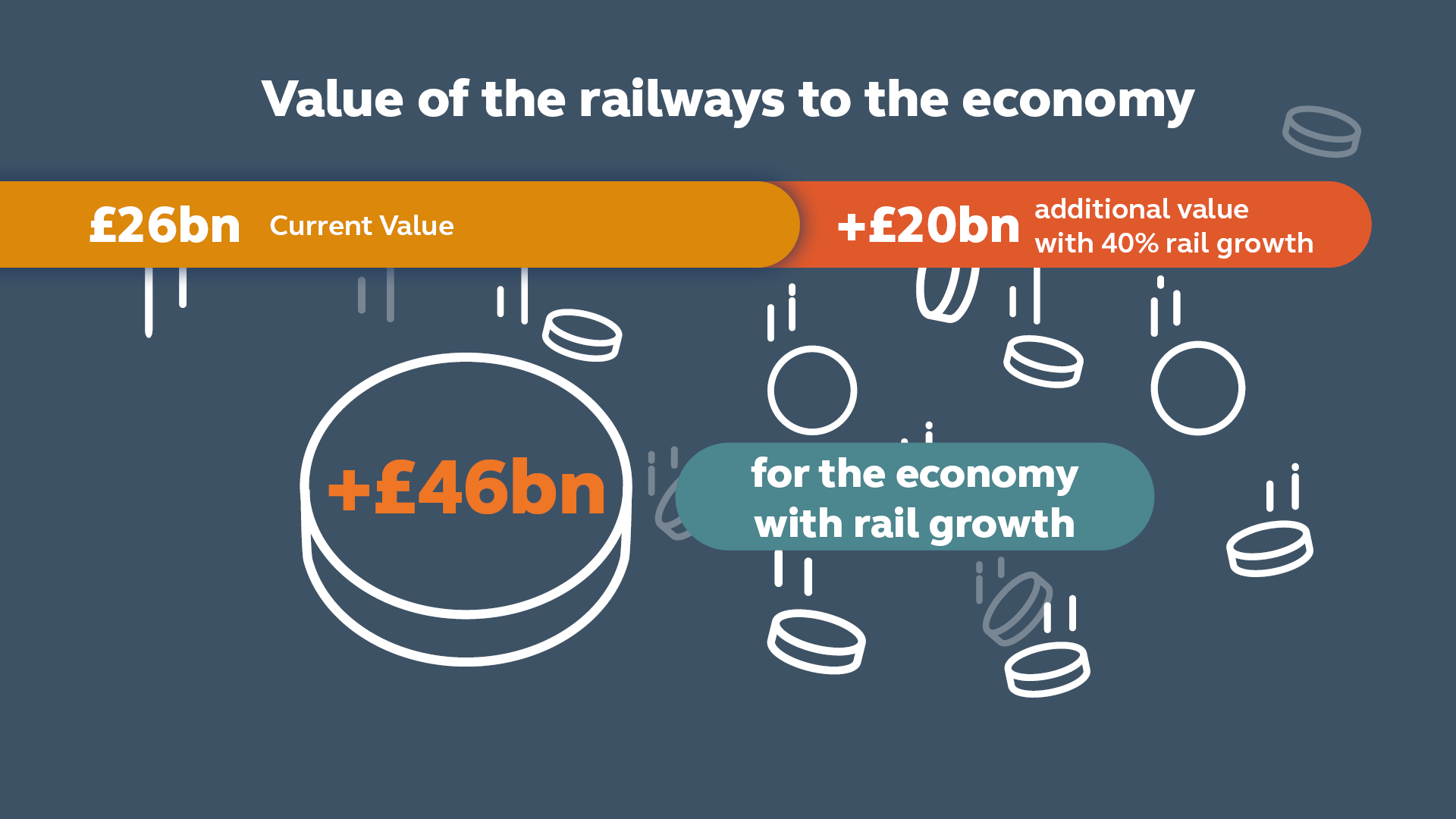
Great Britain’s railways contribute significantly to the economic success of the country: new research from WPI Economics, commissioned by Rail Delivery Group, reveals the rail industry generated £26 billion in economic, environmental and social benefits to UK over the past year, with rail customers contributing £98 billion through spending within local communities.
With the rail network facilitating over three million journeys each day, its impact on the UK economy is significant, playing a key role in the productivity of our cities and towns. The industry also directly employs over 103,000 people across varying roles – from station staff and train drivers to underwater divers and seasons delivery managers.
The UK’s rail network does more than simply transport us from A to B; it plays a crucial role in driving economic growth by connecting businesses and communities, improving productivity, and supporting the transition to net zero.
The creation of Great British Railways is an opportunity for the rail industry to come together and make the improvements that are needed to attract more people to rail, unlocking even greater value for the economy, environment, and wider society.
Rail can and must be the backbone of the country’s future growth and environmental ambitions.
Beyond its current contributions, the rail industry has significant potential for growth, further bolstering the UK economy. According to projections by the Railway Industry Association (RIA), rail travel is expected to grow by an average of 1.6% annually over the next three decades, driven by economic and population growth. This would be equivalent to a 20% increase in rail usage by 2035, if rail usage was to increase by 40%, driven by improved services and a growing preference for rail as a sustainable mode of transport, the total value of the rail industry could soar to £46bn.
See the value of rail in your region
[fa6-solid--arrow-pointer]
Select your region to see how your local economy and community benefit
Value of rail in the East of England
£2.2bn in benefits delivered to the East of England
£1.18bn passenger benefits
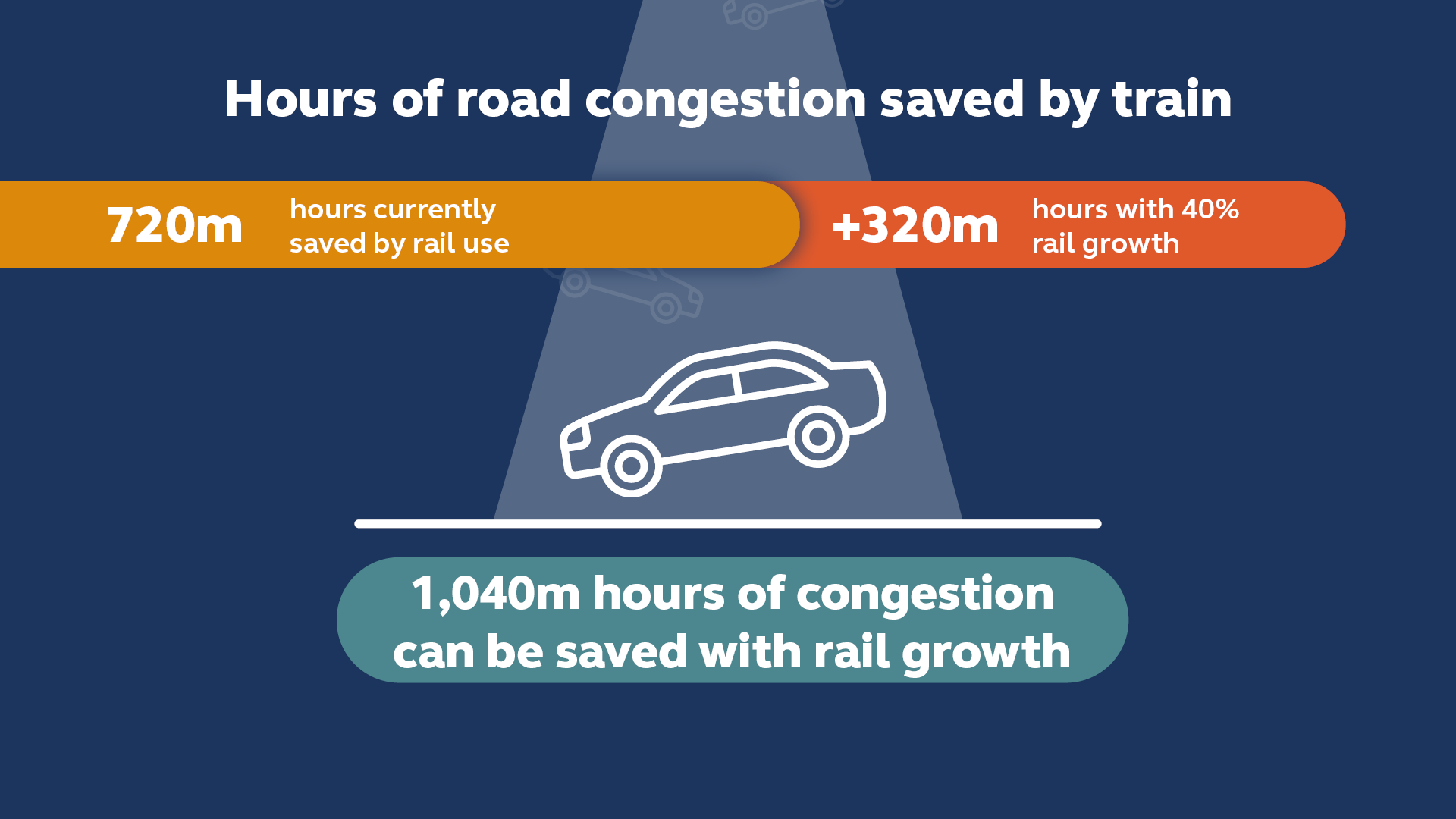
£660m value of decreased congestion
£360m additional benefits – in wider environmental & societal benefits and economic impacts.
40% rail growth could bring +£1.25bn to the East of England
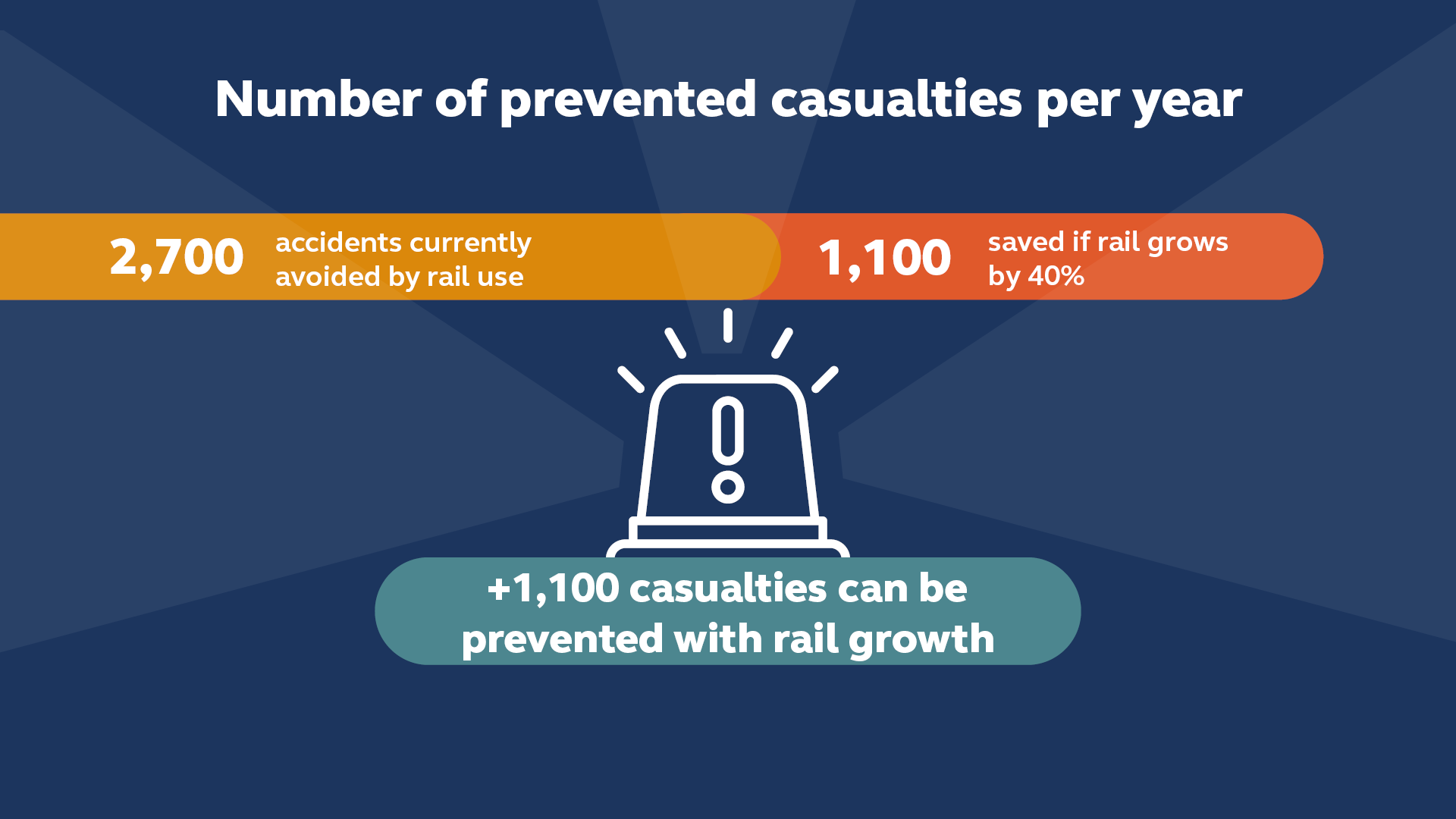
If improvements were made and rail grew by 40% by 2035, greenhouse gases locally would decrease by 0.24Mt, congestion would reduce by 24m hours and an additional 137 accidents would be prevented.
Passengers are spending £74 on average
Passengers surveyed in the East of England reported that they spend on average £74 per complete journey. Based on passenger journeys taken in 2022/23, this means that rail customers could be contributing £6.5bn annually to the East of England.
Over 34% of passengers spend more when travelling by rail in the East of England
Spending £1.81bn on Food & Drink Establishments / £2.11bn on Shopping / £1.71bn on Entertainment & Culture / £360m on Accommodation / £460m on Other travel.
Rail travel contributes £590m each year to the East of England’s independent businesses.
Value of rail in the East Midlands
£750m in benefits delivered to the East Midlands
£390m passenger benefits
£200m value of decreased congestion
£160m additional benefits – in wider environmental & societal benefits and economic impacts.
40% rail growth could bring +£420m to the East Midlands
If improvements were made and rail grew by 40% by 2035, greenhouse gases locally would decrease by 0.09Mt, congestion would reduce by 7m hours and an additional 51 accidents would be prevented.
Passengers are spending £111 on average
Passengers surveyed in the East Midlands reported that they spend on average £111 per complete journey. Based on passenger journeys taken in 2022/23, this means that rail customers could be contributing £2.1bn annually to the East Midlands.
Over 45% of passengers spend more when travelling by rail in the East Midlands
Spending £560m on Food & Drink Establishments / £700m on Shopping / £490m on Entertainment & Culture / £220m on Accommodation / £150m on Other travel.
Rail travel contributes £110m each year to the East Midlands’ independent businesses.
Value of rail in London
£11bn in benefits delivered to London
£5.44bn passenger benefits
£4.69bn value of decreased congestion
£880m additional benefits – in wider environmental & societal benefits and economic impacts.
40% rail growth could bring +£5.73bn to London
If improvements were made and rail grew by 40% by 2035, greenhouse gases locally would decrease by 0.31Mt, congestion would reduce by 182m hours and an additional 224 accidents would be prevented.
Passengers are spending £74 on average
Passengers surveyed in London reported that they spend on average £74 per complete journey. Based on passenger journeys taken in 2022/23, this means that rail customers could be contributing £47.9bn annually to London.
Over 33% of passengers spend more when travelling by rail in London
Spending £13.8bn on Food & Drink Establishments / £17.47bn on Shopping / £9.55bn on Entertainment & Culture / £3.1bn on Accommodation / £3.97bn on Other travel.
Rail travel contributes £9bn each year to London’s independent businesses.
Value of rail in the North East
£410m in benefits delivered to the North East
£270m passenger benefits
80m value of decreased congestion
£60m additional benefits – in wider environmental & societal benefits and economic impacts.
40% rail growth could bring +£290m to the North East
If improvements were made and rail grew by 40% by 2035, greenhouse gases locally would decrease by 0.02mt, congestion would reduce by 3m hours and an additional 14 accidents would be prevented.
Passengers are spending £94 on average
Passengers surveyed in the North East reported that they spend on average £94 per complete journey. Based on passenger journeys taken in 2022/23, this means that rail customers could be contributing £990m annually to the North East.
Over 44% of passengers spend more when travelling by rail in the North East
Spending £300m on Food & Drink Establishments / £300m on Shopping / £230m on Entertainment & Culture / £80m on Accommodation / £80m on Other travel.
Rail travel contributes £90m each year to the North East’s independent businesses.
Value of rail in the North West
£2.1bn in benefits delivered to the North West
£1.16bn passenger benefits
£600m value of decreased congestion
£340m additional benefits – in wider environmental & societal benefits and economic impacts.
40% rail growth could bring +£1.23bn to the North West
If improvements were made and rail grew by 40% by 2035, greenhouse gases locally would decrease by 0.18Mt, congestion would reduce by 22m hours and an additional 106 accidents would be prevented.
Passengers are spending £85 on average
Passengers surveyed in the North West reported that they spend on average £85 per complete journey. Based on passenger journeys taken in 2022/23, this means that rail customers could be contributing £7.8bn annually to the North West.
Over 37% of passengers spend more when travelling by rail in the North West
Spending £2.04bn on Food & Drink Establishments / £2.72bn on Shopping / £1.73bn on Entertainment & Culture / £760m on Accommodation / £530m on Other travel.
Rail travel contributes £570m each year to the North West’s independent businesses.
Value of rail in Scotland
£1.17bn in benefits delivered to Scotland
£900m passenger benefits
£100m value of decreased congestion
£170m additional benefits – in wider environmental & societal benefits and economic impacts.
40% rail growth could bring +£960 to Scotland
If improvements were made and rail grew by 40% by 2035, greenhouse gases locally would decrease by 0.08Mt, congestion would reduce by 4m hours and an additional 43 accidents would be prevented.
Passengers are spending £82 on average
Passengers surveyed in Scotland reported that they spend on average £82 per complete journey. Based on passenger journeys taken in 2022/23, this means that rail customers could be contributing £5.3bn annually to Scotland.
Over 37% of passengers spend more when travelling by rail in Scotland
Spending £1.64bn on Food & Drink Establishments / £1.76bn on Shopping / £1.12bn on Entertainment & Culture / £450m on Accommodation / £350m on Other travel.
Rail travel contributes £380m each year to Scotland’s independent businesses.
Value of rail in the South East
£3.2bn in benefits delivered to the South East
£1.98bn passenger benefits
£580m value of decreased congestion
£640m additional benefits – in wider environmental & societal benefits and economic impacts.
40% rail growth could bring +£2.11bn to the South East
If improvements were made and rail grew by 40% by 2035, greenhouse gases locally would decrease by 0.36Mt, congestion would reduce by 23m hours and an additional 207 accidents would be prevented.
Passengers are spending £67 on average
Passengers surveyed in the South East reported that they spend on average £67 per complete journey. Based on passenger journeys taken in 2022/23, this means that rail customers could be contributing £10bn annually to the South East.
Over 32% of passengers spend more when travelling by rail in the South East
Spending £2.9bn on Food & Drink Establishments / £3.04bn on Shopping / £2.48bn on Entertainment & Culture / £880m on Accommodation / £730m on Other travel.
Rail travel contributes £1.17bn each year to the South East’s independent businesses.
Value of rail in the South West
£1.11bn in benefits delivered to the South West
£660m passenger benefits
£230m value of decreased congestion
£220m additional benefits – in wider environmental & societal benefits and economic impacts.
40% rail growth could bring +700m to the South West
If improvements were made and rail grew by 40% by 2035, greenhouse gases locally would decrease by 0.12Mt, congestion would reduce by 8m hours and an additional 72 accidents would be prevented.
Passengers are spending £78 on average
Passengers surveyed in the South West reported that they spend on average £78 per complete journey. Based on passenger journeys taken in 2022/23, this means that rail customers could be contributing £2.7bn annually to the South West.
Over 35% of passengers spend more when travelling by rail in the South West
Spending £800m on Food & Drink Establishments / £920m on Shopping / £550m on Entertainment & Culture / £260m on Accommodation / £200m on Other travel.
Rail travel contributes £270m each year to the South West’s independent businesses.
Value of rail in Wales
£510m in benefits delivered to Wales
£240m passenger benefits
£140m value of decreased congestion
£130m additional benefits – in wider environmental & societal benefits and economic impacts.
40% rail growth could bring +£260m to Wales
If improvements were made and rail grew by 40% by 2035, greenhouse gases locally would decrease by 0.09Mt, congestion would reduce by 5m hours and an additional 54 accidents would be prevented.
Passengers are spending £72 on average
Passengers surveyed in Wales reported that they spend on average £72 per complete journey. Based on passenger journeys taken in 2022/23, this means that rail customers could be contributing £1.4bn annually to Wales.
Over 35% of passengers spend more when travelling by rail in Wales
Spending £330m on Food & Drink Establishments / £550m on Shopping / £270m on Entertainment & Culture / £150m on Accommodation / £80m on Other travel.
Rail travel contributes £160m each year to Wales’ independent businesses.
Value of rail in the West Midlands
£1.48bn in benefits delivered to the West Midlands
£690m passenger benefits
£530m value of decreased congestion
£260m additional benefits – in wider environmental & societal benefits and economic impacts
40% rail growth could bring +£740m to the West Midlands
If improvements were made and rail grew by 40% by 2035, greenhouse gases locally would decrease by 0.15Mt, congestion would reduce by 21m hours and an additional 85 accidents would be prevented.
Passengers are spending £89 on average
Passengers surveyed in the West Midlands reported that they spend on average £89 per complete journey. Based on passenger journeys taken in 2022/23, this means that rail customers could be contributing £5bn annually to the West Midlands.
Over 39% of passengers spend more when travelling by rail in the West Midlands
Spending £1.3bn on Food & Drink Establishments / £1.89bn on Shopping / £980m on Entertainment & Culture / £440m on Accommodation / £390m on Other travel.
Rail travel contributes £440m each year to the West Midlands’ independent businesses.
Value of rail in Yorkshire & the Humber
£1.62bn in benefits delivered to Yorkshire and The Humber
40% rail growth could bring +£810m to Yorkshire and The Humber
If improvements were made and rail grew by 40% by 2035, greenhouse gases locally would decrease by 0.16Mt, congestion would reduce by 23m hours and an additional 93 accidents would be prevented.
Passengers are spending £83 on average
Passengers surveyed in Yorkshire and The Humber reported that they spend on average £83 per complete journey. Based on passenger journeys taken in 2022/23, this means that rail customers could be contributing £3.9bn annually to Yorkshire and The Humber.
Over 36% of passengers spend more when travelling by rail in Yorkshire and The Humber
Spending £1.13bn on Food & Drink Establishments / £1.37bn on Shopping / £750m on Entertainment & Culture / £390m on Accommodation / £300 on Other travel.
Rail travel contributes £370m each year to Yorkshire and The Humber’s independent businesses.
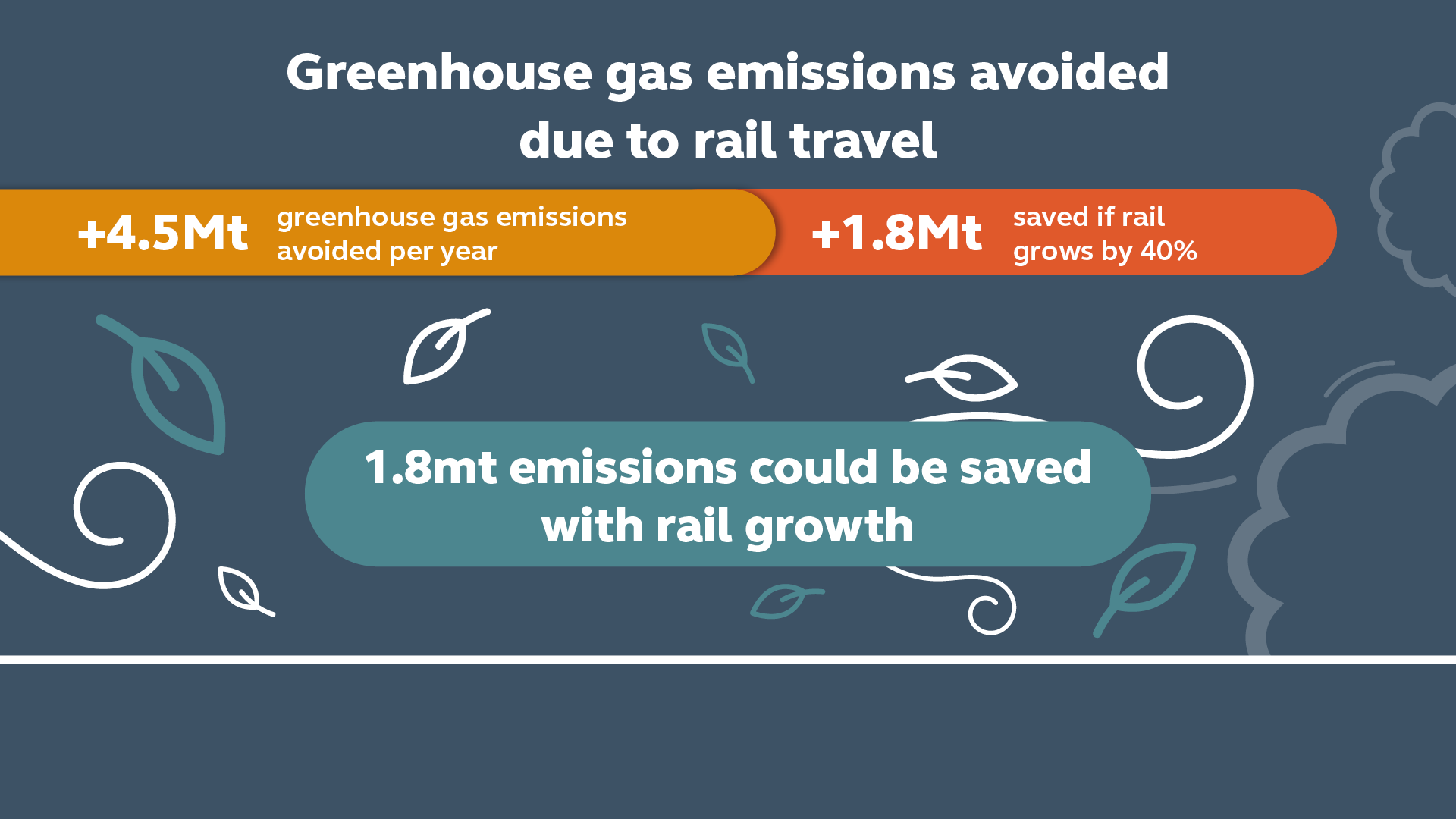
Increasing rail travel across Great Britain is crucial to achieving net zero. For every mile a person travels, passenger trains produce only around a fifth of the greenhouse gas emissions from the average petrol car. This latest research finds that a 40% growth in rail use is needed by 2035 to shift a minimum of four billion miles from car to train, to achieve the country’s net zero targets in line with the Committee on Climate Change (CCC)’s preferred pathway. A shift of this scale could result in a 1.8Mt decrease in greenhouse gas emissions per year – great than all domestic aviation emissions in 2019.
40% rail growth is needed to hit net zero transport targets, reducing 1.8mt decrease in greenhouse gas emissions per year.
The fast-charging technology that we use on this train helps to unlock the potential for significant carbon reductions across the network. Because electric trains are so efficient, if you go by electric train, that’s about 17 times less the emissions than going in an electric car.
The Rails to Roots group is a gardening group. We thought it would be a really lovely project to set up a wellbeing garden at Ridgmont Station Heritage Centre. The vision was always to become a showcase for community rail, and also become a new reason for people to travel along this lovely line.
How Rail Fuels Local Businesses
Across Great Britain
Businesses located in and around rail stations are crucial to local economies. Almost three quarters of customers (73%) see their local station as important to helping the local economy and businesses to thrive. This is further evidenced by spending figures with customers reporting an average spend of £80 per complete journey. Based on the 1.23bn passenger journeys undertaken in 2023, rail customers could contribute £98bn annually to local economies as part of their journey.
[fa6-solid--store]
£98bn generated for local economies
[fa6-solid--school]
73% see their local station as important
to helping the local economy and businesses to thrive
[fa6-solid--sterling-sign]
£80 spent per journey
(not including rail fare)
[fa6-solid--wallet]
42% spend more when travelling by train
compared to other modes of transport
[fa6-solid--bag-shopping]
34% travel by train to shop close to the station.
Shopping was one of the main reasons for choosing rail travel for over a third of passengers
Being inside the station is good for us because we’ve got so many potential customers walking past about 15 (15,000) to 55,000 people per day. Rail is very important to the local economy because it brings in a lot of potential money.
The rail network does really help business with outreach to different areas across Yorkshire, not just locally in York. It helps with our customer base, but in general we’re getting a better employment group as well.
Our town has a population of about 20,000 people, and we have about 65,000 visitors a year. So the station literally helps bring those people to us. Train stations are vital to businesses like us.
People travelling by rail from towns and cities are providing a boost to local independent businesses. A third of passengers are spending with independent businesses, with people grabbing a coffee, getting a haircut, or purchasing a gift before they head out on their train journey, spending about £7 per rail journey at independent businesses, that’s £9bn brought to independent businesses by rail across the Great Britain.
UK Hospitality
[fa6-solid--quote-left]
This insightful report reinforces what we know about the importance of train travel for hospitality and tourism. Trains help bring our customers – domestic and international and our employees to our doors, so we can deliver great experiences and boost economic growth.
We are looking forward to working with the rail industry to further grow the opportunities to reach all parts of our nation and spread the benefits of the hospitality sector.
Train passengers contribute £9bn to independent businesses every year
Read the microeconomies report: Unlocking the Economic Benefits of Rail to Local Communities
The company decided to sell here because it’s one of the main streets, but the fact that the train station is visible was a huge factor in picking out the property. So, when people get off the train, they can actually see the pink store and that brings customers into the store, which is great for us.
Railway is important for local businesses because we are independent and we do need those customers to support us all.
Edinburgh Waverley is really important to us as a business because we’re right next to it and it brings tourism to us all the time. Bringing in more people to the city means more businesses getting more customers, which can then in turn mean more profits. And then that can be reinvested into the businesses and communities.
Changes needed to enable growth
To achieve 40% rail growth by 2035 and enjoy the benefits this will bring to the economy, communities, local businesses and environment we would require additional investment on infrastructure, there is an opportunity within the current system to accelerate growth by increasing customer numbers through the level of service provision.
To make that possible, it is important the rail industry continues its work to bolster the attractiveness of rail to customers, which means focussing on getting the basics right - from improved performance, to improving accessibility and enhancing customer experience.
Alongside future government investment in infrastructure, future growth also depends on action from the rail industry to:
[fa6-solid--gear]
Improve day-to-day performance
[fa6-solid--car-side]
Encourage modal shift
through better integration with other modes of transport
[fa6-solid--users]
Make rail accessible to everyone
[fa6-solid--hand-holding-heart]
and continue to make improvements
to the overall customer experience
The future
[fa6-solid--quote-left]
Rail has a critical role to play in the future of the country in the years to come, and harnessing its potential for growth will deliver vital economic, environmental, and social benefits.
Use our new online Green Travel Data carbon calculator to compare the emissions of your direct rail journey against an equivalent car journey and flight (for routes where flights are available).
Enter your origin and destination stations below to instantly compare carbon emissions across different modes of transport for your journey.
You can also embed our calculator on your own website - just follow these instructions.
Access the Green Travel Data
In addition to our online carbon calculator above, the latest full dataset is available on the Rail Data Marketplace (RDM).
Please register through RDM (if your organisation is not already registered) and request access to Green Travel Data by following the RDM Instructions Guide.
What is Green Travel Data?
Green Travel Data is the outcome of the Green Travel Pledge, which is the rail industry’s commitment to provide detailed, accurate and reliable data on the carbon emissions of rail journeys so that:
The sustainability benefits of travelling by train become clearer and even more compelling;
Travellers are empowered to make more informed choices through easy access to the sustainability credentials of their chosen journey
The business and leisure travel sector can make data on rail journey emissions easier to access and use at the point of sale;
Businesses can accurately measure the emissions of their rail travel to track their progress against sustainability goals.
The data will help encourage travellers and businesses to shift away from more polluting modes such as car and plane, which will stimulate additional journeys by rail.
Green Travel Data is a rail industry initiative being led by the Rail Delivery Group to create a recognised industry benchmark for carbon emissions.
April 2025 - Fully refreshed and updated data available
Building on our Phase 2 in July 2024 where we released carbon emissions data for over 40,000 direct station-to-station routes (over 80,000 journeys accounting for travel in both directions), we’ve now expanded the scope and accuracy of our data to cover:
All rail travel types: Green Travel Data now supports both business and leisure travel, with weekend data now included.
Car emissions comparisons for leisure travel: Updated car emissions figures based on national average car occupancy enable more accurate comparisons.
Air travel emissions data: Comparisons available on routes where scheduled flights are available.
Improved class-based emissions breakdown: First and Standard Class emissions are now calculated based on space occupied per passenger, ensuring more precise results.
Improved energy consumption data: More accurate energy usage figures for different train fleets.
We’re also working to ensure that Green Travel Data is externally verified in the near future.
The results from our latest data shows that rail is up to 13times greener than flying in Britain. The comparison with road journeys varies based on the loading of the train, and the type of train used, but is shows that carbon emissions are lower by rail on 85% of over 40,000 direct station-to-station routes (over 80,000 journeys accounting for travel in both directions) and 93.76% of passenger journeys on those routes when compared to travelling by petrol/diesel car (based on the national average of 1.6 passengers per car).
Download and use the Green Travel Data kitemark logo
If you're using or featuring our carbon calculator or emissions data, you can show your support for greener travel by displaying the Green Travel Data kitemark.
Use the primary lock-up as the default logo across all communications to ensure clear and consistent branding (e.g. websites, journey planners, promotional materials)
Use thesecondary lock-upwhere the National Rail accreditation mark is already prominently displayed, such as on National Rail-branded content or apps.
Jacqueline Starr
Executive Chair & CEO at the Rail Delivery Group
[fa6-solid--quote-left]
Green Travel Data has been developed in partnership with industry experts. As well as business routes, it also now includes leisure journeys, with data covering all seven days of the week to allow us to independently demonstrate the environmental credentials of rail travel.
We have compared per passenger emission data from rail routes in Britain with the equivalent per passenger emission data for the same trip by plane (using Department for Net Zero figures on emissions for domestic air travel).
It shows that rail is up to 13 times greener than flying for business travel in Britain.
You can learn more about the benefits of travelling domestically by rail instead of flying by viewing the graphics below or reading our latest report Clearing the Air: Train vs Plane (note that the emission figures in the Clearing the Air report are based on September 2024 Green Travel Data).
Glasgow to London
Manchester to London
Edinburgh to London
Newcastle to London
You’re welcome to download these graphic tiles which have been designed for sharing on social media, webpages, presentations and publications. Simply right click on the links below and click ‘Save link as’ to save the image file.
In June 2023 the initial data looked at one specific route, London King's Cross to Edinburgh Waverley, which showed rail travel emits 10 times less carbon than car travel.
Read about how carbon emissions expertise from Thrust Carbon and rail data experience from 3Squared are being combined to develop reliable and accurate carbon emission figures.
We want to have an open and honest conversation about the carbon footprint of business travel in Britain.
To support that, we've compiled some questions and answers you may have about Green Travel Data. We'll look to expand on these as we move closer to releasing carbon emission data for rail journeys across Britain.
To view each answer, just click the + icon next to the question.
Questions about the Green Travel Data refresh (updated April 2025)
What is Green Travel Data?
Green Travel Data is the outcome of the Green Travel Pledge which is the rail industry's commitment to provide detailed, accurate and reliable data on the carbon emissions of rail journeys so that:
Travellers are empowered to make more informed choices through easy access to the sustainability credentials of their chosen journey
The sustainability benefits of travelling by train become clearer and even more compelling.
Travel retail and information providers can make data on rail journey emissions easier to access and use for the traveller;
Businesses and travellers can accurately measure the emissions of their rail travel to track their progress against sustainability goals.
The data will help encourage business and leisure travellers to shift away from more polluting modes such as car and plane, which will stimulate additional journeys by rail.
It is a rail industry initiative being led by the Rail Delivery Group (RDG), in partnership with Great British Railways Transition Team (GBRTT), creating a recognised industry benchmark for carbon emissions
Does Green Travel Data data exist for other transport modes?
Green Travel Data focuses on providing the most accurate data possible for rail journeys. We are also working to present it alongside accurate data of other modes of transport.
Is Green Travel Data carbon emission data per passenger or per train?
The calculation is per passenger. This takes into account occupancy data to provide a reliable figure for how many people will be using each route.
At the Point of Sale (PoS), how will Green Travel Data be displayed?
It is intended that Green Travel Data emission values for each journey will be displayed alongside journey results in journey planners and web ticketing services. An API is being developed to make it as easy as possible for retailers and information solution providers to consume the data.
I've seen a carbon calculation for my rail journey when I booked, was this a figure created using the Green Travel Data carbon calculation methodology?
No, there are many different methods for calculating carbon emissions for train journeys.
We believe it's important that the rail industry works from one reliable, accurate and consistent measurement of carbon emissions. That is why we are using granular data to make Green Travel Data carbon emission data as reliable as possible.
We plan to continue to roll Green Travel Data out to new travellers, additional businesses, online booking tools and travel management companies etc.
How do you calculate carbon emissions for rail?
We have been working with carbon emission experts at Thrust Carbon and rail data specialists at Fab Digital to compile rail data and use it to accurately calculate rail emissions for all point-to-point rail journeys in Britain.
Data used includes engine type, fuel type, journey distance, number of carriages, travel class, occupancy and timetable.
Details of the full methodology used to calculate the figures is available via the Rail Data Marketplace.
Why is this methodology important?
Other emission measures, such as the one maintained by DESNZ (the Department for Energy Security and Net Zero) and still colloquially known as the 'Defra methodology', offer a general average emission figure for all customers on rail services in Britain. However, they do not differentiate between various factors including different classes of travel, load factor, or electric vs diesel power units.
The 'Defra methodology' calculates a single emission factor for the average passenger per kilometre, which, while useful for high-level comparisons, does not accurately reflect the emissions associated with individual passengers on specific journeys.
Our Green Travel Data methodology fills this gap, offering a more granular and nuanced understanding of rail emissions. It considers the specific characteristics of different rail routes and allocates emissions to individual passengers based on the following (not exhaustive): number of carriages dedicated to each class, the average load factor for each class, and the volume of trains run on each route.
This approach can provide a more accurate measure of the emissions associated with individual passengers and can serve as a powerful tool in enabling more accurate reporting on rail emissions for businesses, whilst also shaping strategies for emission reduction in the rail sector.
What data do you use to calculate the emissions for a train journey?
Our carbon calculations for rail take into account: engine type, fuel type, journey distance, number of carriages, travel class, occupancy and timetable.
Why do the figures change from one release to the next?
We will update the data each time a new timetable is introduced. This can lead to a change in passenger behaviour, which can affect the passenger numbers on a particular route. Additionally the types of train that operate the service may change, leading to a different emission value for the train itself.
The scope and accuracy of the data is also evolving continually as we work to make our data as accurate and representative as possible. Recent changes that may have an impact include:
expanding the scope to include weekends.
updating the assumed car occupancy to better reflect leisure and business travel. (from 1 to 1.6 people per car).
incorporating new data on the emission values of trains.
What is the difference between Green Travel Pledge and Green Travel Data?
The Green Travel Pledge was the rail industry commitment to develop an accurate, consistent and independent set of sustainability data for the rail industry.
The output of the pledge is our Green Travel Data. As the data becomes more widely available, it will be referred to as Green Travel Data in future. We are developing a new kite mark for Green Travel Data so that you can know that your preferred supplier is using approved data when you see it.
How do you factor in train splits and joins into the methodology?
Our methodology uses the number of carriages and number of passengers between any two station stops on a journey and aggregates these. As such, any joining or splitting of trains would be factored into the overall emission calculations for the route as this would alter the number of carriages and passenger load at the appropriate point.
How do you factor in different fuel types, like diesel?
Our methodology takes into account the type of train - electric or diesel - operating on specific routes. This allows us to estimate emissions accordingly. Where trains change from electric to diesel (and vice versa) en route, we will take this into account.
What happens if the train I was on got cancelled and a diesel train was used, how will the figures be updated?
At this stage, we will not be factoring in 'one-off' train cancellations. We will only factor in changes if they substantially impact the rail timetable.
What happens when my train changes from electric to diesel power during the journey?
For these journeys, we are able to identify the emissions for each part of the journey, and as such can calculate the emissions for the entire route, even if the route is partially electric and partially diesel.
What journeys does the data cover?
Only direct journeys are currently included. We have recently expanded the scope to cover journeys on all seven days of the week.
There is a small number stations with a direct service between them (approx. 1% of the total) that are not covered in the results.
These journeys are missing because passenger loading information isn't available for the current timetable, typically because the timetable has changed recently, or there is long term engineering work affecting services.
Does the data cover business and leisure travel?
The initial focus of Green Travel Data was to cover the key business travel routes. The scope has now been broadened to cover all direct journeys, both business (B2B) and leisure (B2C).
Why does the emission value differ for the same journeys from one set of data to another?
As part of our ongoing analysis, we continually improve our algorithms and implement enhancements to achieve higher accuracy in our calculations. Additional data sets are also included when they become available. We also update the input data to reflect the latest timetable, train routing, rolling stock and passenger numbers at the time of publication. Any of these can result in variations in emission values.
My journey includes a change of train, why is it not shown in the data?
Only direct journeys are currently included. If a journey includes a change of train, that journey is not currently covered by green travel data.
We are working to widen the scope to include indirect journeys in future phases.
Why are the emission figures on some routes higher than others?
Green Travel Data considers a number of factors to ensure that the results are specific to each route. The journey distance, the number of passengers making the journey, the number of carriages on the train, and the type of rolling stock used will influence the exact emission value.
Busier routes will see lower per passenger emission figures. On routes where older train fleets are currently used, the emissions may be higher. The results of Green Travel Data can be used to help inform future rolling stock replacement and electrification projects which will increase the sustainability of services across the network.
How is the car emission data for each route calculated?
Car emissions are sourced from the Government's Department for Energy Security and Net Zero, Greenhouse gas reporting: using the latest published conversion factor, using the Business Travel - land data set.
Initially, as Green Travel Data was focused on business travel, the 'Executive car' kgCO2e per km figure value was used. As the scope has been expanded to cover leisure journeys too, the values now used are for the average car size.
The route distances were calculated using the OSRM (Open Source Routing Machine) project. Coordinates for each station pair were processed to determine the shortest road route. If a station wasn't directly accessible by public roads, the nearest accessible road was used.
By multiplying the 'kgCO2e per km' figures with the route distances, we calculate emission values for petrol/diesel, hybrid plug-in electric, and battery electric cars for each journey.
The emission value is then divided by the national average of 1.6 passengers per vehicle to calculate a per-passenger value.
It should be noted that in previous sets of data, car occupancy was assumed to be one person, which is typical of business travel. This change in occupancy has seen a reduction in the resulting per-passenger car emission values.
Why do a small number of train routes have relatively high emissions?
While train travel is usually greener than other modes of transport, emissions can be relatively high on a small number of routes. This variation can be due to a number of factors, including low passenger numbers or, as only direct journeys are currently covered, those direct journeys only occurring at less busy times.
An example of this is the result for journeys between Ipswich and Harwich International. The emission value is particularly high as there are only four direct trains between this station, all of which have lower passenger numbers. The majority of journeys between these two stations are indirect, and if taken into account, would reduce the emission value per passenger considerably.
The work to include both direct and indirect journeys in the results will form part of future phases.
Questions about the methodology behind the carbon emission calculations
Does this data incorporate short term service changes caused by industrial action, engineering work or service disruption?
No, the data is based on the planned, long term timetable which is refreshed twice a year. This doesn't reflect any short term variations but assumes typical conditions for the route. We plan to look at how real time variations can be covered in future phases.
Are CO2e emissions for the train journey divided by the current average number of passengers per train?
Green Travel Data identifies all direct services between the two station and works out the emission value for each service (per km emission value for the booked train type x the distance).
The average passenger load on each train is derived from the passenger count for each station-to-station segment of the journey.
From these values, we calculate average emissions of trains specific to journeys between the specific to stations.
What CO2 density for the national grid (kg CO2 per kWh) has been used?
Why is there a difference between per passenger emissions for train services to railway stations in the same city (e.g. Edinburgh Waverley and Haymarket Station)?
Green Travel Data per passenger emission figures take into account a lot more than just the distance of the journey.
The type of train (and fuel it uses), the number of carriages that make up the train and the number of customers on the train (especially off-peak services that may be quieter at certain times of the day) can heavily impact the overall per passenger emission figure on each route.
For rail emissions, what is the basis of the emissions for the electric train? Is it kWh per km? If so, what is the source of the data?
Energy values per kilometre are derived for electric trains from Network Rail EC4T data. We are continuing to gather data from as many sources as possible to better improve our emissions calculations.
What occupancy figures are used to create the per passenger emission figure for rail travel?
Green Travel Data uses MOIRA modelled data to derive the loading for each direct service between any two station pairs. From this we can work out the passenger mileage between those two points and from that the average loading value for all services. This data is currently derived from the May 2023 timetable. Future data publications will be updated to reflect the forecast for the latest timetable. Please refer back to the Green Travel Data website for any updates.
Are the Green Travel Data emission figures for rail travel reversible for journeys. E.g. are emission figures the London King's Cross to Edinburgh Waverley the same as Edinburgh Waverley to London King's Cross?
Yes the figures take into account travel in either direction.
Does Green Travel Data methodology include passengers standing?
Yes, as the data used includes passenger load, this will include all passengers on that train.
Do you take into account travel on the weekend?
The scope of Green Travel Data has been expanded in include all journeys made, seven days a week.
Are journeys by rail replacement bus included within Green Travel Data data?
Whilst Green Travel Data doesn't currently take short term engineering work into account, any buses operating as part of the long term (six monthly) timetable will be incorporated using emission conversion figures for local buses for the UK Government's Greenhouse Gas Conversion factors.
Do you take into account rail staff travel?
If a ticket is purchased for travel or a seat booking is made, then this would count towards the occupancy figures we use to calculate the per passenger emissions. There are some cases in which a pass or on the day upgrade is purchased, which may mean that we do not take then into account certain journeys.
Do you consider catering on the train?
Energy used on the train for heating food and drink, and energy required to move the portion of the train using by catering areas are included in the train emission figures.
Do you consider how staff get to the station to support the running of the train (train drivers, station staff, etc)?
How staff get to the station to support the running of the train is not included in this phase of the initiative but will be considered in planning future phases.
Are all train operators included within Green Travel Data?
We have received data from the vast majority of train operators including all government contracted services. All routes are covered.
If timetables change, how is this considered?
Timetables typically change every six months in the rail industry. Our figures will be updated to reflect any changes made in the timetable to train routes or passenger volumes.
How often is the data refreshed?
We plan to refresh our data twice a year, in line with when new timetable data is published for the GB rail industry.
Which timetable and passenger load data are you currently using?
The results are based on the timetable that was current between June and December 2024. A process will be put in place shortly to refresh data to incorporate the latest timetable which runs from December 2024 to May 2025, and passenger loads twice a year after each timetable change.
With First Class included within the seven data points, what First Class tickets are included?
Passenger forecasted data is used for the Green Travel Data, which includes first class data captured at the point of sale.
First class ticket upgrades, whether through an external auction site, operators own upgrade pre departure site, walk up upgrades, on board upgrades are not currently included, however we are looking at how this can be incorporated, in future phases.
Some train operators have recently permanently declassified their First Class to Standard Class, how is this factored into the data?
Some train operators under instruction from the Department for Transport (DfT) have withdrawn First Class from their services, in these cases, all travellers are considered to be travelling in standard class accommodation.
On certain routes and certain journeys, first class accommodation is made available to standard class passengers due to high passenger loads, our model assumes passengers will be travelling in the class of accommodation of the ticket they purchased.
Are the Green Travel Data emission figures for rail business travel an average figure or specifically referring to Standard or First Class travel?
The scope of Green Travel Data has been expanded to include figures for passengers travelling in first class and standard class separately, as well as a combined average figure for both classes. The method of calculation for each class of accommodation has been improved to better reflect the additional space taken up by each first class seat where this is the case.
Do you count Standard Premium travel on Avanti West Coast services as Standard or First Class when estimating emissions?
We consider Standard Premium as Standard travel for the purposes of calculating rail emissions.
Is there potential to quantify the costs of carbon emissions as a per head/household figure in £/$/€?
We'll be exploring methods to incorporate cost measurements into our data (including potential visualisation in £/$/€ per head/household) in the future.
What enhancements can I expect in future phases?
We are continually working to further widen the scope of the Green Travel Data. Planned enhancements /considerations include:
Incorporating real time variations to the timetable, rolling stock and passenger numbers
Providing results for indirect journeys
External ISO accreditation of Green Travel Data
First and last mile (by other transport modes)
Provide the data in an API so that it can be incorporated into point-of-sale information systems such as journey planners.
Why is this not available to all customers when booking via train operators and retailers?
Data is now available for all direct journeys. We hope to expand this to cover all indirect journeys in future phases and create an API which will be available for all retailers to consume at point of sale.
Can you work out the carbon emissions for a journey using multiple train operators?
Currently we have data for direct journeys i.e. those with no changes. Where more than one train operator runs trains on that route, the data for each will be used to calculate the final figure.
However, in future phases we plan to include indirect journeys (those with changes), allowing rail users to have access their emissions values for multiple legs of a journeys.
Why do only certain routes have comparisons with air travel?
Where regularly scheduled direct flights operate between cities where there is a corresponding direct rail service, comparative figures for the journey by air are included in the results.
Where flights operate to multiple airports (e.g. flights from Edinburgh operate to London Gatwick and London Heathrow) the air figures reflect the mean figure of the two routes.
What data has been used for airline travel comparisons released in April 2025?
Green Travel Data uses the UK Government's most recently released set of emission conversion factors for domestic flights which are published by the Department for Energy Security and Net Zero (DESNZ). These figures are based on the average emissions of all domestic UK flights which reflects the fact that Green Travel Data has been expanded to include both business and leisure travel.
Which class of airline travel are you comparing?
The DESNZ figures are based on the average split between economy and business class travel, taking into account that business class is not available on many domestic flights.
Are Well to Tank (indirect) emissions considered as part of Green Travel Data figures?
This isn't currently available as part of Green Travel Data data, however we are looking to include indirect factors for all transport modes in future phases.
What fuel consumption is used for the diesel/petrol car, for car emissions?
Green Travel Data has used the latest available UK Government’s Greenhouse Gas Conversion factors and the Business Travel by land - Unknown category for car emissions, which covers diesel and petrol cars.
What consumption (km per kWh) is assumed for the battery electric car, for car emissions?
What is the assumed CO2 density of the electricity used to charge the battery, for car emissions?
This energy value is then turned into an emission figure by mapping to the UK Government’s Greenhouse Gas Conversion factors.
Does Green Travel Data take into account ‘first and last mile’ travel to and from the station?
Not at this stage as we have focused purely on the rail journey emissions. Future phases will make our rail data available for consumption by various multi-modal journey planners and e-ticketing systems.
Does Green Travel Data consider rail freight as part of the calculations?
At this stage, rail freight is not part of the calculations. However, we understand there is a huge environmental benefit to rail freight's role in removing HGV congestion from our roads and are exploring opportunities to include rail freight calculations moving forward.
Why isn't Green Travel Data data featured within Network Rail's "One train journey at a time" and "A Greener Future" campaigns?
Green Travel Data data has been expanded to cover travel seven days a week and also leisure and business travel. As such, we are looking to incorporate it into any future campaigns.
Is Grey Fleet (use of employee's private vehicles) factored into your comparisons with car travel?
Yes, our calculations for car are a basic average figure for all vehicles used on British roads. While initially, data was presented on the assumption of one person in each vehicle (which is typical for business travellers), as we have now expanded Green Travel Data to include leisure travel as well, the national average occupancy on a car is now being used in our calculations.
Questions about the project
How are you supporting businesses to save carbon by switching to rail travel?
We have developed a new rail carbon calculator which provides detailed, accurate and reliable data on the carbon emissions of rail journeys to businesses at the point of sale.
This new tool allows businesses and business travellers to easily demonstrate the green credentials of switching to rail travel from less environmentally-friendly alternatives such as car and plane travel.
As a corporate organisation, how should Green Travel Data feature within our travel policy/guiding principles?
We want to help encourage businesses to modal shift away from car and plane travel to stimulate additional business journeys by train.
Please contact us at This email address is being protected from spambots. You need JavaScript enabled to view it. to discuss your involvement with the Green Travel Data project.
How do I get involved with Green Travel Data?
If you would like additional details on Green Travel Data, or you're a business, travel management company or online booking tool provider who would like access to this data, please contact This email address is being protected from spambots. You need JavaScript enabled to view it..
Is the Green Travel Data methodology independently validated or accredited?
Central to the ethos of Green Travel Data is the aim to develop and set of data that is accurate, impartial and trustworthy. To achieve this, we have word with sustainability experts to ensure our methodology that meets these aims.
In addition, we have worked closely with the UK Statistics Authority to ensure that our methodology follows their Code of Practice for Statistics for official statistics. Having demonstrated our commitment to Trustworthiness, Quality and Value we have been added to their list of Voluntary Adopters of the Code.
In addition to this, we are in the process of attaining ISO 14083 Accreditation which relates to the quantification and reporting of greenhouse gas emissions arising from transport chain operations.
Questions about how to use carbon emissions calculation data
Is your carbon emission data specific for train operators running the same route?
Many tickets offer "any route permitted" travel between two stations so we provide a figure for the station-to-station journey, which averages out all rail services running along that route to take into account the flexibility provided. The exception would be if your fare specifies only a specific route; in that case we will calculate it according to the train operator providing that specific service and route.
Will the data be available to consume via an API?
We plan to release an open API/data feed in the next phases to allow travel management companies, online booking tools and other business travel providers with the opportunity to consume the carbon emission data and supply it to business travellers at the point of sale.
How can I access the Green Travel Data data?
Green Travel Data carbon emission data is available via the Rail Data Marketplace (RDM). RDM is a central platform for finding and sharing rail data, allowing us to share data with multiple parties quickly and easily via a number of formats.